The ability to offer flexible pricing models has become a way to win deals. Buyers increasingly expect to pay the way they want, whether that means a subscription, usage-based pricing, prepaid credits, an enterprise commitment, or some combination of all four. The vendor who can structure the deal the customer wants often takes it. The vendor who cannot loses on terms, not on product.
That is why commercial flexibility now reads as a competitive advantage rather than a finance preference. But there is a catch that rarely shows up in the sales conversation: pricing agility is not a sales capability. It is an operational one. Whether you can actually offer a flexible model depends on whether finance and operations can quote it, bill it, recognize the revenue correctly, and report on it without a quarter of manual cleanup behind them.
This article covers what customers now expect, why supporting flexible pricing models is a finance and operations problem rather than a sales one, where flexibility tends to break down across the quote-to-cash lifecycle, and how leading organizations enable it while keeping governance, scalability, and financial integrity intact. The goal is a clear view of what it actually takes to make flexibility a durable advantage rather than a promise you cannot operationalize.
What is commercial flexibility, and why is it a competitive advantage?
Commercial flexibility is an organization's ability to offer, execute, and change pricing and packaging to fit what a customer wants to buy, without breaking the systems that quote, bill, and recognize revenue. It is a competitive advantage because it lets you meet a buyer on their preferred terms while competitors are still constrained by what their systems allow.
The advantage is measurable. Gartner projects that by 2027, 70% of leading SaaS vendors will offer consumption-based pricing across at least part of their portfolio, which means the ability to price by consumption is shifting from a differentiator to a baseline expectation. The companies that move early capture the deals that need that structure. The ones that wait find themselves explaining why they can only sell one way.
There is a margin story too, not just a top-line one. Chargebee's 2025 State of Recurring Revenue and Monetization report found that companies using hybrid pricing were roughly twice as likely to report margin improvements as companies on pure usage models. Flexibility, done well, is not just easier to sell. It protects the economics of what you sell.
Why is supporting flexible pricing models a finance and operations problem, not just a sales one?
Supporting flexible pricing models is a finance and operations problem because the deal does not end when the customer signs. It has to be quoted accurately, billed correctly every cycle, recognized under the accounting standard, and reported on with confidence. Sales creates the commitment. Finance and operations carry it for the life of the contract.
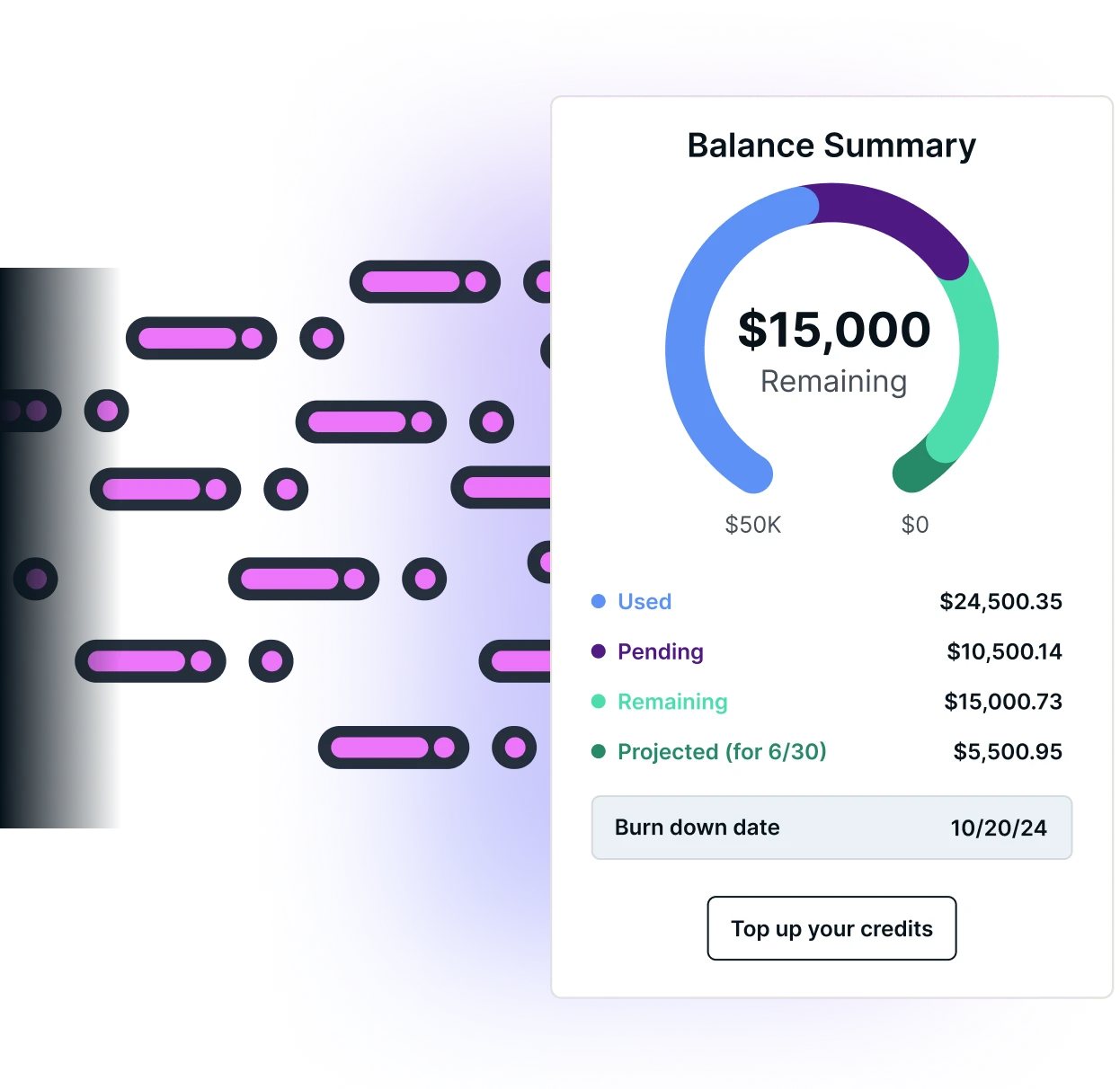
A sales team can promise a prepaid credit pool with a usage drawdown and an annual minimum in a single call. Delivering on that promise means the billing system tracks the balance in real time, the revenue system recognizes correctly as credits are consumed, and the ERP produces numbers an auditor will accept. If any of those cannot keep up, the flexible model that won the deal becomes the exception that finance manages by hand every month.
This is why pricing agility so often stalls. The commercial idea is easy. The operational reality is that a flexible model touches four systems owned by four teams, and the model only works if all four agree on what the deal is. The short version, covered in more detail in where the numbers stop agreeing: flexibility is a systems capability before it is a sales one.
What flexible pricing models do customers expect now?
Customers now expect a menu, not a single option. The four models that show up most often in B2B SaaS deals are subscriptions, usage-based pricing, prepaid credits, and enterprise commitments, frequently combined into a single hybrid agreement. Being able to support all four, and mix them, is what commercial flexibility looks like in practice.
Each model answers a different buyer need:
- Subscriptions give the customer predictable cost and give the vendor predictable revenue. This is the baseline, and it is the one every system handles well.
- Usage-based pricing aligns cost with value, so the customer pays for what they consume. Adoption is now mainstream: Metronome's State of Usage-Based Pricing 2025 reports that 77% of the largest software companies run some form of usage-based pricing.
- Prepaid credits let a customer commit budget up front and draw it down across products over time, which improves vendor cash flow and gives the buyer flexibility in how they spend.
- Enterprise commitments trade a volume or spend floor for better pricing, which requires the vendor to track actuals against the commitment and true up the difference.
The demand signal is clear, and it is accelerating. The harder question is not whether to offer these models. It is whether your operation can carry them once you do.
Where do flexible pricing models break down across quote, bill, recognize, and report?
Flexible pricing models break down at the handoffs: quote to bill, bill to revenue, and revenue to report. Each handoff is a point where the deal has to be translated from one system's language into the next, and each translation is where context gets lost and manual work creeps in.
At the quote
The quote is where flexibility either gets captured cleanly or gets encoded as a workaround. When the quoting layer — Salesforce CPQ today and Agentforce Revenue Management going forward — can express a hybrid structure natively, the deal flows downstream intact. When it cannot, the terms end up in a side agreement or a spreadsheet, and every system after it inherits an incomplete picture. Extending the quoting layer to handle ramps, credits, and commitments is why teams look to configure Continuous Control for complex deals rather than force them through a setup that was never built for them.
At the bill
Billing is where a flexible model has to run every cycle, not just once. Usage has to be metered and rated, prepaid balances drawn down, commitments checked against actuals, and all of it turned into an invoice the customer will not dispute. High-volume usage in particular can exceed what native billing modules were built for, which is why a dedicated usage metering and rating engine often sits in front of billing to keep invoices accurate at scale.
At revenue recognition
Revenue recognition is where the accounting standard and the pricing model have to be reconciled. Under ASC 606, revenue is recognized as performance obligations are satisfied, which for usage and prepaid credits usually means the recognition schedule looks nothing like the billing schedule. Getting this right in NetSuite Advanced Revenue Management is what keeps the close clean and keeps flexible pricing from becoming an audit question.
At reporting
Reporting is where leadership finds out whether the first three stages held together. If the number in the CRM does not match the number in the ERP, the flexible model that looked good in the deal room becomes a reconciliation project at quarter-end. Reliable reporting is the proof that flexibility was operationalized, not just promised.
How do you enable flexible pricing without losing governance and financial integrity?
You enable flexible pricing without losing control by keeping the logic that governs a deal inside your systems of record rather than in the manual layer around them. Governance, scalability, and financial integrity hold when the rules for quoting, billing, and recognition are configured once, applied consistently, and produce a full audit trail automatically.
Three principles separate the organizations that scale flexibility from the ones that drown in it:
- Configure, do not customize. When a new pricing model requires an engineering sprint, pricing is coupled to your release cycle and every change adds risk. When it can be configured, finance and operations can move at the speed sales needs. This is the difference between pricing agility and pricing debt.
- Keep one source of truth per function. Sales intent lives in Salesforce, revenue and the books live in NetSuite, and the two stay in agreement automatically. Governance breaks the moment a third source, usually a spreadsheet, becomes load-bearing.
- Build the audit trail in, not after. Financial integrity is not a quarter-end reconciliation. It is full traceability from the commercial event to the recognized revenue line, generated as the deal executes, so the close is validation rather than correction.
Flexibility and control are often treated as a tradeoff. They are not. The organizations that offer the most commercial flexibility are usually the ones with the strongest governance, because they built the systems to carry complexity before they went to market with it. Continuous Control is built on exactly that principle — commercial logic configured once inside Salesforce and NetSuite, producing clean data for every downstream system without middleware or custom code.
What does it cost when finance and operations can't keep up?
When finance and operations cannot keep up with flexible pricing, the cost shows up as revenue leakage: money the company already earned but never billed or collected correctly. It is quiet, it is recurring, and it compounds as deal complexity grows.
The scale is significant. MGI Research estimates that 42% of companies experience revenue leakage, with businesses losing between 1% and 5% of annual revenue, and that the leakage concentrates in the quote-to-cash process: contract-to-cash execution failures, integration gaps between billing and financial systems, and revenue recognition control deficiencies. For a company at $100M in revenue, 1% to 5% is $1M to $5M a year, most of it preventable.
The leakage is only the visible cost. The quieter one is the deals never done, because the model the customer wanted was one the operation could not support. That cost never appears on a reconciliation report, but it is the one that decides who wins the market for flexible pricing.
Frequently asked questions
What is commercial flexibility in SaaS?
Commercial flexibility is a company's ability to offer, execute, and change pricing and packaging to match what a customer wants to buy, without breaking the systems that quote, bill, and recognize revenue. It spans subscriptions, usage-based pricing, prepaid credits, enterprise commitments, and hybrid combinations of them.
Why are flexible pricing models a finance problem, not just a sales one?
Flexible pricing models are a finance problem because the deal has to be billed, recognized, and reported for its full life, not just quoted once. Sales creates the commitment, but finance and operations carry it. If billing, revenue recognition, and reporting cannot execute the model, it becomes a monthly manual exception.
What flexible pricing models do B2B SaaS customers expect?
B2B SaaS customers increasingly expect a choice among subscriptions, usage-based pricing, prepaid credits, and enterprise commitments, often combined into a single hybrid agreement. Usage-based pricing in particular is now mainstream, with 77% of the largest software companies running some form of it, according to Metronome's 2025 report.
How much revenue does poor quote-to-cash execution cost?
MGI Research estimates that 42% of companies experience revenue leakage and lose between 1% and 5% of annual revenue, concentrated in the quote-to-cash process. For a company at $100M in revenue, that is $1M to $5M a year, most of it preventable and driven by billing, integration, and revenue recognition gaps.
How do you keep governance and financial integrity while offering flexible pricing?
You keep governance and financial integrity by configuring pricing rules once inside your systems of record rather than in spreadsheets, keeping one source of truth per function, and generating the audit trail as deals execute. Control holds when the logic that governs a deal lives in the systems, not the manual layer around them.