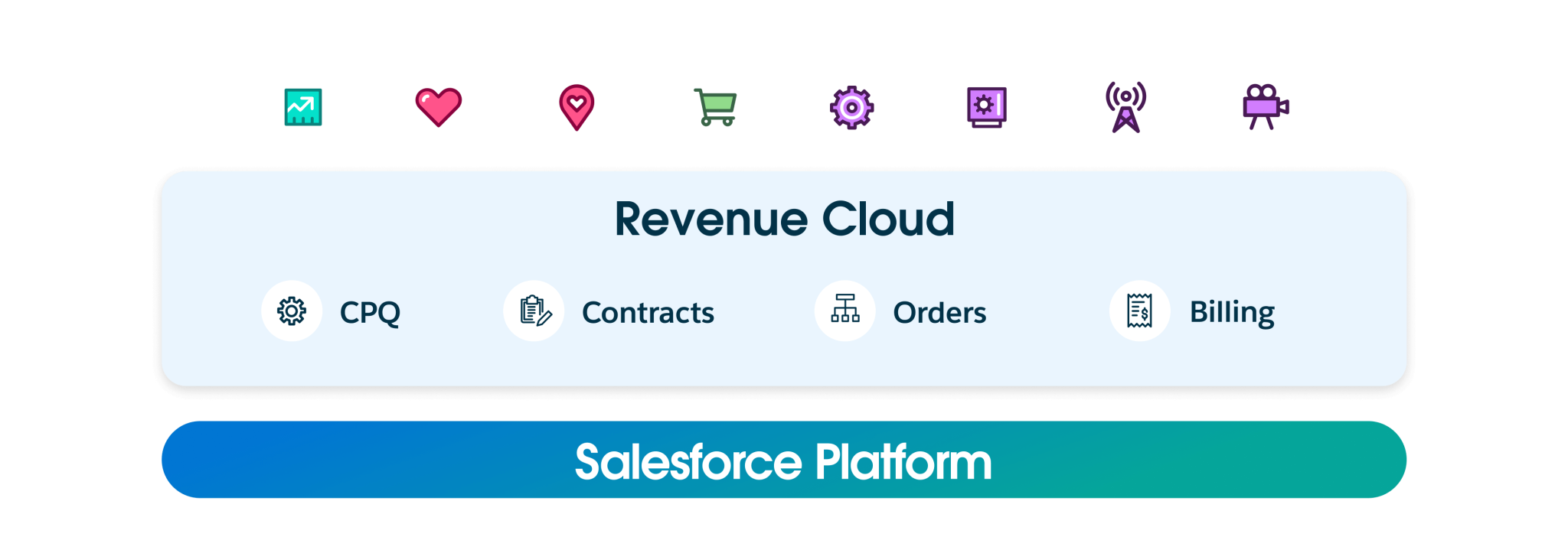
- Revenue Cloud Advanced (ARM) is a full reimplementation that exposes every weakness in your quote-to-cash foundation
- Poor product catalogs, unreliable usage data, and manual lifecycle events break customer trust and slow revenue
- ARM amplifies fragmentation between Salesforce and NetSuite instead of fixing it
- Teams that clean up and standardize first adopt ARM faster — without rebuilding twice
The Reality Check: RCA/ARM Isn't an Upgrade — It's a Reimplementation
Salesforce's Revenue Cloud Advanced (RCA), now Agentforce Revenue Management (ARM), modernizes Salesforce's revenue engine and fundamentally changes how Salesforce and NetSuite must work together. For companies already running complex quote-to-cash processes, this isn't a version update. It's a full reimplementation — one that will expose every inefficiency, integration gap, and data weakness in your current architecture.
What We're Seeing in the Market
Five patterns consistently emerge with companies deep into CPQ and Billing:
1. Your Customer Experience Shouldn't Depend on Support Tickets
Most customers can't see their usage, credit balances, or contract details, so they open support tickets for basic questions. This reactive model frustrates users, burdens internal teams, and erodes trust — especially in usage-based models where real-time visibility is expected.
2. When SKUs Don't Map to Value, Trust Breaks Down
Workarounds like placeholder SKUs or loosely defined product hierarchies create quoting confusion and billing disconnects. The result: customers are unsure of what they purchased or why they were charged.
3. Governance Gaps and Manual Handoffs Create Rework
What began as flexible CPQ configuration has evolved into a patchwork of overrides and uncontrolled customizations. Even after deals are signed, corrections are often required before revenue can be recognized.
4. Unstructured or Manual Consumption Data
As businesses move toward monetizing usage, the supporting data often isn't ready. Usage data may be captured inconsistently, defined differently across products, or manually tracked in spreadsheets. Sales teams miss upsell signals and Finance can't reconcile revenue.
5. Fragmented Lifecycle Events Derail Growth
Renewals, amendments, and cancellations are often managed through manual workarounds or outside systems. This leads to duplicate records, conflicting contract data, and unreliable renewal reporting.
Is Your Business RCA/ARM Ready? Ask These 5 Questions
- Is our product catalog standardized and enforceable?
- Do our SKUs map to value — for us and our customers?
- Is our usage data reliable and available in real time?
- Are renewals, amendments, and cancellations governed and aligned?
- Can Sales, Finance, and Customers all see the same thing?
Without that foundation, even the best RCA/ARM implementation will fall short of expectations.
How Continuous Helps You Get Revenue Ready
Continuous helps Salesforce and NetSuite enterprises prepare for RCA/ARM by fixing what's underneath — the quote-to-cash foundations that everything depends on. Teams can add modern pricing, usage, and credit models directly within Salesforce, connect Salesforce quoting and billing to NetSuite with real-time data flow, and evaluate ARM readiness on their own timeline.
Companies that clean up now and build the right foundation will move faster, scale smarter, and avoid the pain of rebuilding twice.