The Shift That Broke the Subscription Model
For years, SaaS companies relied on subscriptions. Predictable pricing, recurring invoices, and standardized contracts became the default. But that's starting to change. Today's most successful tech companies — like Snowflake, AWS, and Databricks — are shifting to prepaid usage models: savings plans, credit pools, and enterprise commitments that tie revenue to actual product consumption.
This isn't just a new pricing option. It's a deeper change in how revenue is created, recognized, and managed. And it's quickly becoming the standard for modern B2B software.
Subscriptions Worked — Until They Didn't
The subscription model had a good run. But it was never really aligned with how customers use software. You committed to a package, paid every month or year, and hoped you got value out of it. The result? A lot of shelfware. Unused seats. Over-provisioned tiers. Products collecting dust while the meter keeps running.
That's why the smartest companies aren't choosing between subscriptions and usage — they're adopting prepaid usage models that offer the best of both. They're selling prepaid usage commitments: enterprise savings plans, credit pools, or drawdowns tied to forecasted demand. Customers lock in value. Vendors lock in a commitment.
Why Pure Usage-Based Pricing Isn't the Endgame
Moving from subscriptions to usage-based pricing was a big step forward. But for both vendors and customers, pay-as-you-go has real limitations. On the vendor side, usage volatility makes revenue hard to predict. On the customer side, it's hard to budget — CFOs hate open-ended invoices.
That's why most leading companies layered on prepaid usage models. Volume-based discounts in exchange for upfront commitments. Customers get flexibility. Vendors get predictability.
Snowflake: The Playbook for Prepaid Usage at Scale
Snowflake doesn't sell subscriptions. Instead, Snowflake sells usage commitments — enterprise contracts where customers prepay for credits they can draw down over time. As of their latest earnings, Snowflake reported $6.7 billion in RPO, up 34% year-over-year.
RPO isn't recognized revenue. It's a committed contract. The revenue only lands when customers actually use the credits. Most companies fall short — they adopt prepaid models but don't operationalize them. Credit balances live in billing systems or spreadsheets. Customer-facing teams don't know what's been used. The result? RPO just sits on the books instead of turning into revenue.
You Can't Drive Revenue If You Can't See the Credits
When revenue depends on prepaid commitments, credit visibility isn't just a back-office metric — it's a growth lever. But in most companies, credit data is buried in billing systems or finance-owned spreadsheets. CSMs are in Salesforce. Account execs are in Salesforce. But the data they need to drive adoption, expansion, and renewals is stuck elsewhere.
- If usage is lagging, it's a customer success issue
- If there's a pile of unused credits, it's a sales opportunity
- If finance can't see burn rates, it's a forecasting risk
Embedded Revenue Infrastructure: Built for the Prepaid Era
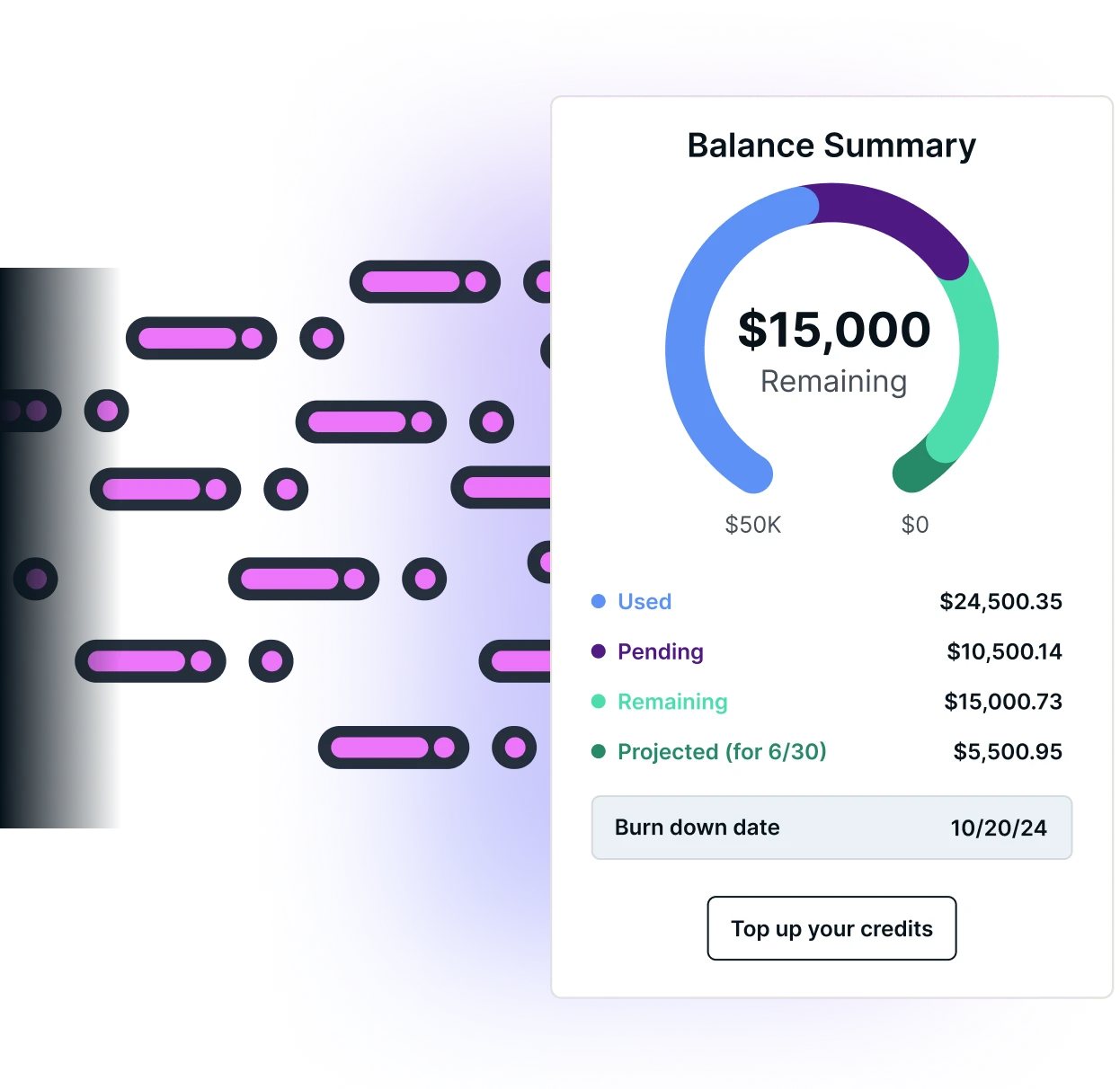
Most billing systems weren't built for prepaid usage. Continuous is different. We're a usage-based billing platform built to work within your core systems. We don't just calculate usage — we make it visible and actionable in Salesforce, NetSuite, and other platforms you already rely on.
Sales teams can see credit consumption on the customer record. Finance can forecast based on real-time usage. Customer success can intervene before credits go unused. This is Embedded Revenue Infrastructure — infrastructure that helps teams turn prepaid commitments into recognized revenue.