"Quote-to-cash becomes core business infrastructure, not a system you rebuild every year." Nine predictions for how organizations will transform their revenue operations in 2026.
1. Quote-to-Cash as Essential Infrastructure
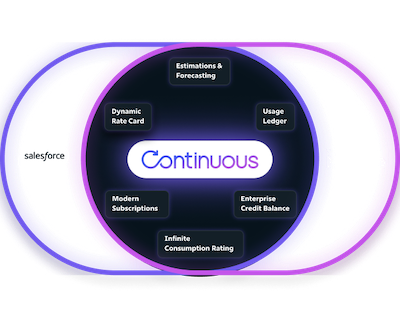
Companies will shift from treating quote-to-cash as a temporary project to viewing it as mission-critical infrastructure. Revenue logic will move directly into Salesforce and NetSuite rather than relying on disconnected third-party tools.
2. Embedded Revenue Logic Over System Stacking
Rather than continuing to layer additional CPQ, billing, and usage tools, organizations will focus on aligning pricing and revenue handling within their core systems. "Embedded revenue infrastructure" replaces the middleware approach that has historically slowed transformation efforts.
3. Hybrid Models Become Standard
By 2026, supporting subscriptions, usage, credits, and commitments simultaneously will be expected, not innovative. Execution quality will differentiate market leaders from struggling competitors.
4. Entitlements as the Central Hub
Entitlements data will serve as the connecting point between sales, product, and finance operations. Accuracy here ensures downstream processes function correctly.
5. Finance Involvement Moves Upstream
Finance teams will set guardrails for quote-to-cash architecture from the start, rather than managing problems after deals are designed. This prevents billing and revenue recognition issues at close.
6. Continuous Improvement Over Complete Rebuilds
Organizations will modernize existing systems incrementally instead of launching expensive multi-year reimplementations — especially following Salesforce CPQ's end-of-sale. The rebuild tax is too high; incremental improvement wins.
7. The 60-Second Rule
Data transparency will distinguish market leaders. Companies capable of tracing deals from quote through revenue recognition in under 60 seconds will gain stakeholder trust. If your CFO can't get a clean answer in a minute, your architecture is the problem.
8. Rise of the Revenue Architect Role
A new specialist role bridging CRM and ERP systems will emerge within scaling organizations, combining business analysis with financial expertise. These practitioners understand both what Salesforce can quote and what NetSuite can recognize — and they know what has to happen in between.
9. Pricing Agility as Growth Lever
Organizations shipping new pricing models continuously — without breaking operations — will outcompete those treating pricing changes as major transformations. Speed to market on pricing is now a competitive advantage.
Core Insight
The underlying theme: companies that treat quote-to-cash as connective infrastructure will move faster, price more creatively, and operate with confidence. Success depends on keeping sales and finance systems aligned through a single source of truth — not reconciling them after the fact.